Save big on preschool resources today!

🍁 The Power of Real Images and Interactive Activities in Building Preschool Vocabulary
🍁 Build fall vocabulary with real photos! These interactive ideas helps preschool and pre-k students strengthen language, matching, and comprehension skills through hands-on fall-themed activities. Perfect for circle time, speech therapy, or ELL support — low prep and full of real-life learning fun!
LANGUAGE DEVELOPMENTFALL/AUTUMN THEME
5/8/20243 min read


As preschool teachers, we know how quickly young children soak up new words — and how just as quickly they can forget them. Vocabulary isn’t just about naming objects; it’s about connecting words to meaning. And one of the best ways to strengthen those connections is by using real images and interactive, hands-on activities in your classroom.
In this post, we’ll explore why real photographs are so powerful for early learners, how interactive activities boost language retention, and simple ways to bring these strategies into your fall lessons.
🍂 Why Real Images Matter in Preschool Vocabulary Development
Real photographs allow children to connect new words to the world they see every day. Unlike clip art, which can be abstract or simplified, real photos show authentic details — texture, color, and shape — that help children understand what an object truly looks like.
When children sort, match, or name real pictures, they’re not just memorizing vocabulary; they’re making meaningful visual and cognitive connections.
🌟 Benefits of Using Real Images:
Concrete understanding: Children see real objects instead of symbolic drawings.
Inclusive learning: Real photos support diverse learners, including ELLs and children with special needs.
Better retention: Real visuals help students remember words because they’re connected to real-life experiences.
Language confidence: Kids are more likely to use words in conversation when they recognize them in their everyday world.
For example, a photo of a real pumpkin shows the rough texture, the stem, and the natural variations in color — all details that make vocabulary stick far better than a cartoon image ever could.
🎨 How Interactive Activities Deepen Language Learning
Pairing real images with interactive tasks turns vocabulary learning into a sensory, hands-on experience.
When children manipulate picture cards, move pieces on a storyboard, or match images to scenes, they’re doing more than identifying words — they’re:
Engaging multiple senses (sight, touch, and even speech)
Practicing critical thinking and categorization
Building sentence skills as they describe what they see
Strengthening memory through active participation
Interactive learning gives students ownership of the lesson. Instead of passively naming pictures, they explore and build meaning — and that’s where deep learning happens.
🍎 How to Use Real-Image Activities in Your Fall Theme
Fall is the perfect season to introduce new vocabulary!
With so many familiar, tangible items — pumpkins, leaves, apples, sweaters, and acorns — children can easily connect what they see in pictures to what they experience outdoors.
Here are a few classroom ideas:
Sorting Mats: Have students sort real photo cards by category — clothing, food, nature, and activities. Discuss how each relates to fall.
Interactive Storyboards: Let children build stories using real-image pieces. “The boy is raking the leaves.” “The squirrel found an acorn.”
Matching Games: Pair real and graphic images to help students recognize the same concept in multiple forms.
Vocabulary Books: Encourage students to match picture pieces and say each new word aloud to reinforce learning through repetition.
Each of these activities gives preschoolers the hands-on practice they need to retain new vocabulary in a meaningful, enjoyable way.
🌻 Why It Works
Using real images + interactive play activates both sides of the brain — the visual centers that recognize images and the language centers that process meaning.
This dual activation helps children retain vocabulary longer, improve comprehension, and build confidence when speaking and describing what they see.
And best of all — it’s fun! When learning feels like play, students are more engaged and motivated to participate.
✨ Ready-to-Use Fall Vocabulary Activities
If you’d like to save time and bring these strategies to your classroom right away, you’ll love these resources I’ve created for busy preschool teachers:
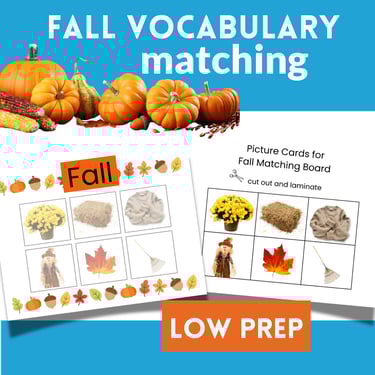
🍂 Preschool Fall Sorting Realistic and Graphic Images | Low Prep Sorting Activity
→ Help students build comprehension and vocabulary through hands-on sorting with real and illustrated images.
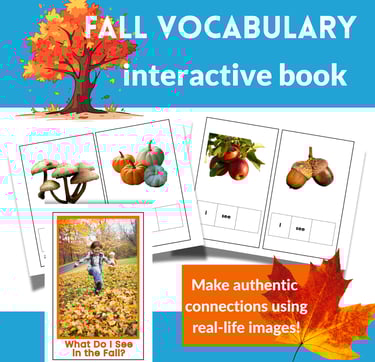
🍁 Fall Vocabulary Interactive Book with Real Pictures
→ Engage students in matching, labeling, and storytelling with real-life fall photos that make new words stick.
Both resources are low prep, print-and-go, and perfect for your fall theme, speech centers, or ELL support groups.
❤️ Final Thoughts
When children see, touch, and talk about real things, vocabulary becomes meaningful and memorable.
By combining realistic visuals with interactive learning, you’re not just teaching words — you’re building connections that last a lifetime.
Prep and Play Preschool
Time saving resources for preschool teachers.
© 2025. All rights reserved.